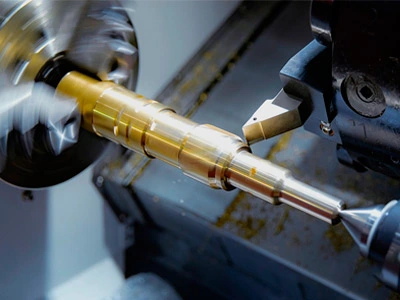
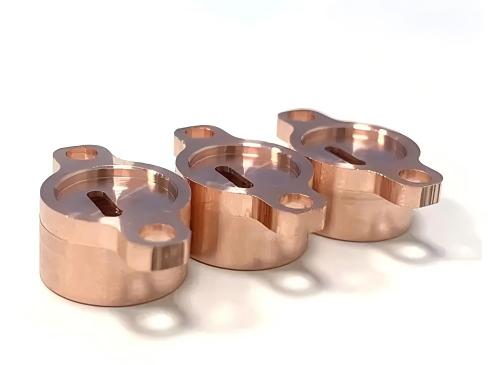
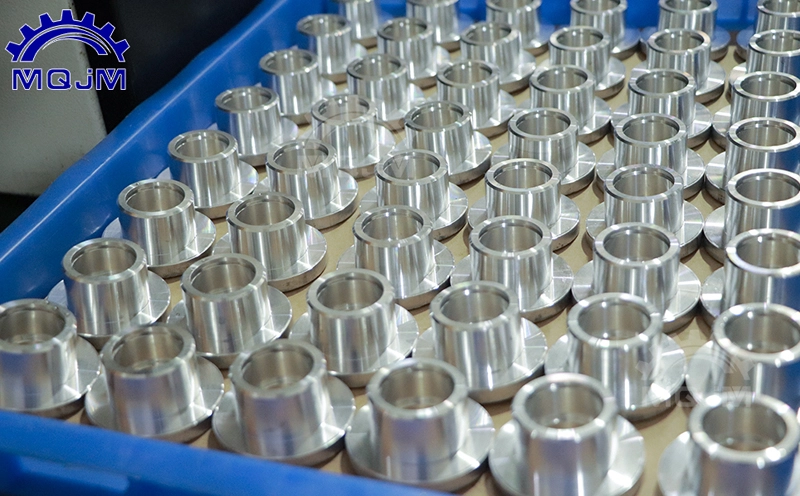
The next generation of aircraft is being shaped by a simple engineering goal: achieving higher performance with less weight and greater reliability. Behind every aerodynamic improvement, fuel efficiency upgrade, and advanced flight system is a growing demand for components that are lighter, stronger, and more precisely manufactured than ever before. This shift has fundamentally changed the expectations placed on aerospace machining.
Traditional machining methods were developed for producing relatively straightforward mechanical parts, but modern aerospace components are rarely simple. Many parts now feature lightweight structures, complex curved surfaces, internal channels, and tight dimensional requirements that require advanced manufacturing strategies. Producing these components successfully depends not only on machine capability but also on the ability to understand materials, optimize processes, and maintain consistent quality throughout production.
This evolution has accelerated the adoption of advanced cnc aerospace parts manufacturing technologies. With multi-axis machining, intelligent process control, and improved inspection methods, professional China aerospace cnc machining suppliers are helping aerospace manufacturers overcome challenges that conventional machining cannot efficiently solve.
MQJM CNC focuses on precision machining solutions designed for demanding industrial applications, supporting aerospace component production where accuracy, repeatability, and engineering reliability are essential.
The Unique Manufacturing Requirements Behind Modern Aerospace Components
Aerospace components are among the most demanding parts produced in modern manufacturing because they must perform reliably under extreme operating conditions. Aircraft systems experience continuous vibration, temperature changes, pressure variations, and mechanical stress during operation. As a result, every component must be manufactured with careful consideration of strength, durability, and dimensional stability.
Unlike general industrial parts, aerospace components often require a combination of lightweight design and exceptional mechanical performance. Engineers continuously optimize aircraft structures to reduce unnecessary weight while maintaining safety margins. This creates complex manufacturing challenges because even small design improvements can require more advanced machining processes.
Modern cnc aerospace parts production involves much more than basic cutting operations. Manufacturers must accurately interpret complex CAD designs, select suitable machining strategies, and maintain stable production conditions throughout the manufacturing process. The ability to achieve repeatable results is especially important for aerospace applications where multiple components must integrate precisely within larger systems.
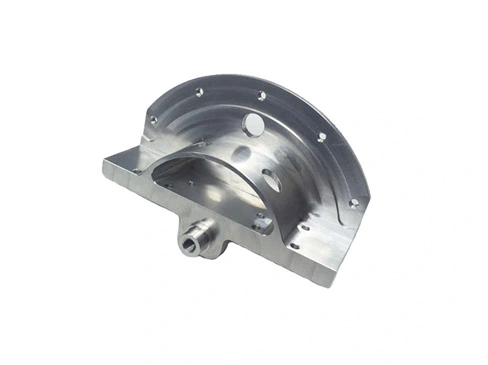
Advanced CNC equipment allows manufacturers to produce aerospace components with complex features, including curved surfaces, precision holes, thin-wall structures, and integrated designs. These capabilities help engineers develop more efficient aircraft systems while maintaining strict performance requirements.
To meet these demanding aerospace manufacturing requirements, companies need machining partners with advanced equipment, process expertise, and the ability to handle complex part designs. MQJM CNC provides a range of precision machining solutions, including advanced CNC processes developed for industries where accuracy and consistency are critical. More details about available capabilities can be found through its precision CNC machining solutions.
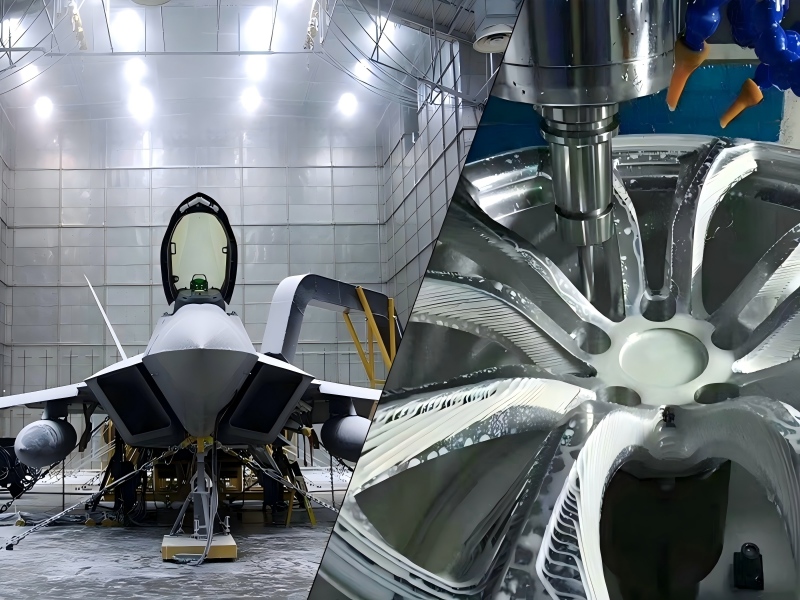
Material Challenges That Push Aerospace Machining Beyond Conventional Methods
Material selection plays a critical role in aerospace engineering. Aircraft manufacturers use specialized materials to achieve high strength, reduced weight, corrosion resistance, and thermal stability. However, these same properties that make aerospace materials valuable also make them more difficult to machine.
Titanium alloys are widely used in aerospace applications because they offer excellent strength-to-weight performance. However, titanium generates significant heat during machining because of its low thermal conductivity, which can accelerate tool wear if machining parameters are not properly controlled.
Aluminum alloys are another important aerospace material because of their lightweight characteristics and corrosion resistance. Although aluminum is generally easier to machine than titanium or nickel alloys, aerospace-grade aluminum components often involve complex geometries and strict tolerance requirements.
Nickel-based superalloys present another challenge because they maintain mechanical strength at high temperatures. These materials are commonly used in demanding environments such as engine components but require specialized tooling and optimized cutting strategies.
Professional China aerospace cnc machining providers must understand how different materials respond during machining. Tool selection, cutting speed, feed rate, cooling methods, and inspection procedures all influence final component quality.
| Manufacturing Aspect | Conventional Machining | Aerospace CNC Machining |
|---|
| Material Processing | Typically focused on common metals with predictable machining behavior | Handles advanced materials such as titanium alloys, aerospace aluminum, and nickel-based alloys |
| Component Design | Usually suitable for simpler mechanical structures | Supports complex geometries, lightweight structures, and integrated features |
| Accuracy Requirements | General industrial dimensional requirements | Requires highly controlled tolerances and repeatable production results |
| Production Management | Standard machining monitoring | Includes advanced inspection, process verification, and quality documentation |
| Technology Requirements | Often relies on traditional CNC or manual processes | Uses multi-axis CNC machining and advanced manufacturing strategies |
Complex Geometries and Tight Tolerances Driving the Need for Advanced CNC Aerospace Parts Production
The increasing complexity of aerospace designs is one of the main reasons conventional machining methods are no longer sufficient for many applications. Modern aircraft components are designed to maximize performance while minimizing weight, resulting in structures that often include complicated shapes and difficult machining requirements.
Components such as aircraft brackets, structural parts, engine components, and precision assemblies may include multiple surfaces, internal passages, and irregular geometries. Producing these designs requires CNC systems capable of maintaining accuracy across multiple machining operations.
Advanced cnc aerospace parts manufacturing enables engineers to create components that would be difficult or impossible to produce through traditional machining approaches. CNC programming allows manufacturers to precisely control tool movement, optimize machining paths, and achieve consistent results across production batches.
Tight tolerances are especially important in aerospace applications because components must integrate seamlessly with other systems. Poor dimensional control can create assembly problems, reduce efficiency, and affect long-term reliability. Advanced CNC machining provides the stability needed to produce parts that meet strict engineering specifications.
Maintaining Consistency Across High-Precision Aerospace Part Manufacturing
Aerospace manufacturing requires consistency as much as precision. Producing one accurate component is not enough; manufacturers must ensure that every part produced meets the same quality standards throughout the entire production process.
Maintaining consistency requires careful control of machine performance, programming accuracy, tooling conditions, inspection methods, and manufacturing procedures. Advanced CNC systems help reduce variation by automating critical operations and maintaining stable machining conditions.
Quality assurance is also a key factor in professional China aerospace cnc machining services. Aerospace customers often require detailed verification processes to confirm that components meet design specifications before entering final assembly.
MQJM CNC integrates precision machining expertise with modern manufacturing technology to support industries requiring dependable component quality. Through controlled processes and engineering-focused solutions, MQJM CNC helps customers manage the challenges associated with complex aerospace manufacturing.
How Multi-Axis CNC Technology Expands Possibilities for Aerospace Component Design
Multi-axis CNC technology has transformed aerospace manufacturing by allowing engineers to develop more advanced component designs. Traditional machining methods often require multiple setups, which increases production time and creates additional opportunities for positioning errors.
With multi-axis CNC machining, manufacturers can approach a component from multiple directions during a single machining process. This improves accuracy, reduces setup requirements, and allows more complex geometries to be produced efficiently.
For cnc aerospace parts, multi-axis capabilities are especially valuable when manufacturing components with curved surfaces, lightweight structures, and challenging internal features. These technologies provide greater design freedom while maintaining the precision required for aerospace applications.
The continued development of CNC technology has also strengthened the role of global machining suppliers. Experienced china aerospace cnc machining companies equipped with advanced systems can support aerospace manufacturers seeking reliable production capabilities for complex components.
When aerospace projects involve complex geometries, specialized materials, or strict production requirements, early communication helps determine the most suitable machining approach. Companies can discuss part specifications, technical requirements, and project details with MQJM CNC through its engineering consultation channel to identify the right manufacturing solution.
Conclusion
Aerospace parts production has evolved far beyond conventional machining. The combination of advanced materials, increasingly complex designs, strict tolerance requirements, and demanding operating environments requires manufacturing capabilities that can deliver both precision and reliability.
Advanced CNC technology provides the foundation for producing modern aerospace components by improving accuracy, supporting complex geometries, and maintaining consistent quality throughout production. From material processing to final inspection, every stage of manufacturing contributes to the performance and reliability of aerospace systems.
As aerospace engineering continues to advance, the demand for professional cnc aerospace parts production and reliable china aerospace cnc machining solutions will continue to increase. With advanced machining capabilities and engineering expertise, MQJM CNC supports aerospace applications that require dependable performance, repeatable quality, and precision manufacturing.
FAQ
1. Why does aerospace machining require more advanced technology?
Aerospace machining requires advanced technology because components must meet strict requirements for precision, material performance, complex geometry, and long-term reliability.
2. What materials are commonly used in CNC aerospace parts production?
Common materials include titanium alloys, aerospace aluminum alloys, nickel-based superalloys, and composite materials selected for strength and lightweight performance.
3. What makes CNC aerospace parts different from standard machined components?
CNC aerospace parts usually require tighter tolerances, more complex designs, specialized materials, and stricter quality control compared with standard industrial components.
4. Why is multi-axis CNC machining important for aerospace components?
Multi-axis CNC machining allows manufacturers to produce complex shapes with fewer setups, improving accuracy, efficiency, and design flexibility.
5. How do China aerospace cnc machining suppliers ensure quality?
Professional suppliers ensure quality through advanced CNC equipment, process monitoring, precision inspection, and controlled manufacturing procedures.
6. How does aerospace CNC machining support aircraft development?
Aerospace CNC machining enables the production of lightweight, precise, and reliable components that contribute to safer and more efficient aircraft systems.