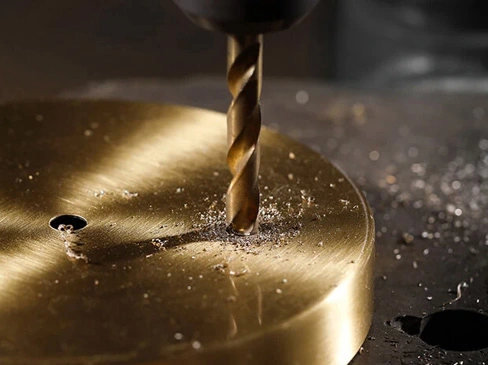
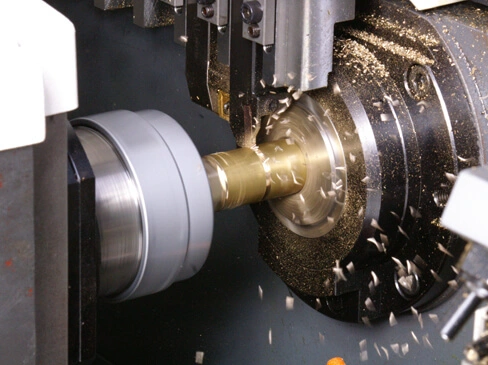
In 2026, the pressure to reduce component weight is no longer limited to aerospace and motorsport. It has become a core engineering requirement across electric vehicles, drones, robotics, medical devices, cycling hardware, and high-performance industrial equipment. For procurement and engineering teams, the question has shifted from "Can this part be machined?" to "Can this part be made lighter without sacrificing strength, tolerance stability, surface quality, and production repeatability?" This is precisely where aluminium CNC turning becomes a strategic manufacturing decision. Aluminum turning parts offer a combination of low density, strong machinability, corrosion resistance, and surface treatment compatibility that few other materials can match at comparable cost—and when produced through a precision CNC turning workflow, they can achieve thin-wall structures that reduce weight dramatically while maintaining the dimensional accuracy that demanding assemblies require. MQJM's aluminum turning parts service supports rapid prototyping and small-to-large volume production, with CNC turning processes including drilling, boring, threading, and knurling across multiple aluminum alloy grades.
Why Weight Reduction Has Become a Procurement Priority Across Every Industry
The pain point is not abstract. Every gram of unnecessary weight in an EV drivetrain component reduces range. Every gram in a drone frame reduces payload capacity or flight time. Every gram in a robotic arm increases the motor torque required for movement, which increases energy consumption and reduces cycle speed. In aerospace, weight directly translates to fuel cost and payload margin. In cycling and motorsport, it translates to competitive performance.
For procurement and engineering teams managing these weight-sensitive programs, the typical challenges when sourcing precision components include:
Steel parts provide the required strength but add weight that the design cannot afford
Plastic parts are lightweight but lack the dimensional stability, heat resistance, or load-bearing capability the application requires
Complex thin-wall designs are difficult to machine without deformation, especially in aluminum
Prototype suppliers may achieve acceptable quality on a single piece but fail to maintain consistency across batch production
Poor alloy selection causes corrosion, cracking, or anodizing defects that require rework or redesign
Tolerance drift between prototype and production batches affects assembly reliability
Lightweight designs become fragile if wall thickness is not optimized for the specific alloy and loading condition
The solution is not simply choosing aluminum over steel. It is choosing the right aluminum alloy, the right turning strategy, the right tolerance plan, and the right surface finish—and working with a supplier who can maintain that combination from the first prototype through repeat production batches.
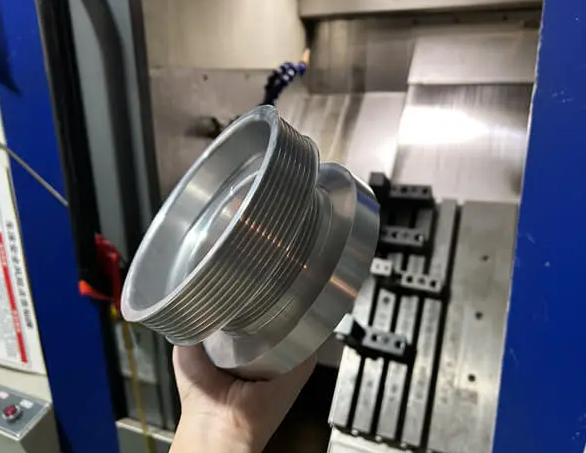
What Aluminium CNC Turning Is and Why It Matters for Lightweight Design
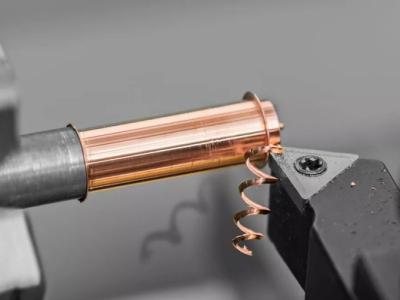
Aluminium CNC turning is a computer-controlled machining process where aluminum bar stock, tubes, or billets are rotated on a CNC lathe while cutting tools remove material to form cylindrical, threaded, grooved, knurled, bored, or precision-contoured components. The process is controlled by CAD/CAM data that governs tool movement, cutting depth, feed rate, spindle speed, and machining sequence—enabling high repeatability across prototype and production quantities.
Aluminum turning parts are the natural choice when the component has round, shaft-like, sleeve-like, connector-like, spacer-like, or rotational features. Common examples include aluminum shafts, spacers, bushings, housings, sleeves, connectors, knurled knobs, threaded fittings, drone mounts, EV connectors, aerospace bushings, sensor housings, and lightweight fastener components.
Why Aluminum Is the Preferred Lightweight Turning Material
| Material | Strength | Weight | Machinability | Best Application |
|---|
| Aluminum 6061 series | Good | Low | Excellent | EV parts, housings, brackets, general industrial |
| Aluminum 7075 series | Very high | Low | Good but demanding | Aerospace, UAV, racing, high-load lightweight parts |
| Stainless steel | High | High | More difficult | Corrosion-critical and high-strength applications |
| Plastic | Low to medium | Very low | Easy | Non-load-bearing or insulation-focused parts |
| Brass | Medium | Higher | Excellent | Decorative, electrical, threaded components |
6061 vs 7075: The Most Important Alloy Decision in Aluminum Turning
The choice between 6061 and 7075 aluminum is the most consequential material decision in most lightweight CNC turning projects.
6061-T6 / 6061-T651 is the most widely used aluminum alloy in precision turning. It offers a strong balance of machinability, corrosion resistance, anodizing performance, weldability, and cost. For most EV components, industrial housings, brackets, and general-purpose lightweight parts, 6061 provides sufficient strength with excellent surface finish compatibility.
7075-T6 / 7075-T651 / 7075-T7451 delivers significantly higher strength-to-weight performance, making it the preferred choice for aerospace structures, high-performance UAV frames, racing components, and any application where the load-to-weight ratio is the primary design driver. The trade-off is that 7075 requires more careful machining control, is more sensitive to corrosion without protective coating, and costs more than 6061.
MQJM's material comparison covers both alloy families alongside 2024-T351, 5052-H112, and 5083-H112, allowing buyers to evaluate density, conductivity, melting range, and other physical properties before confirming the production route.
How Precision CNC Turning Produces Thin-Wall but Structurally Strong Aluminum Components
The engineering challenge in lightweight aluminum turning is not simply removing material to reduce weight. It is removing the right material, in the right sequence, with the right tooling and fixturing, to produce a thin-wall structure that maintains dimensional accuracy and structural integrity under real operating loads.
How CNC Turning Works for Lightweight Parts
A CNC lathe rotates the aluminum workpiece while cutting tools remove material according to a programmed toolpath. Integrating CAD or CAM files into the aluminum CNC turning process allows machines to follow strict measurements, reduce human error, save cost, and improve productivity. For thin-wall components, the CAM strategy is as important as the machine capability—toolpath sequencing, cutting direction, and material removal balance all affect whether the part holds its shape or deforms during machining.
Why Thin-Wall Aluminum Turning Is Technically Demanding
Thin-wall aluminum components are valuable for lightweight design but technically challenging because they can deform under:
Cutting force applied by the tool during material removal
Clamping pressure from the chuck or fixture
Heat buildup from friction and cutting
Tool vibration transmitted through the thin wall
Uneven material removal that creates internal stress
Poor fixture support that allows the part to flex during cutting
Aggressive feed and speed settings that exceed the wall's rigidity
The Precision Turning Workflow That Prevents Thin-Wall Failure
A strong aluminum CNC turning workflow for thin-wall components should include:
DFM review before machining to identify deformation risk and optimize wall thickness
Proper alloy selection matched to the wall thickness and load requirement
Balanced material removal sequence to minimize internal stress
Sharp tools specifically designed for aluminum to reduce cutting force
Low-vibration toolpaths that minimize chatter on thin sections
Stable clamping with soft jaws or custom fixtures that support the part without distorting it
In-process dimensional inspection to catch deformation before it compounds
Surface treatment planning that accounts for dimensional change during anodizing
Final inspection before shipment with documented dimensional results
MQJM's professional technical team provides manufacturability feedback to help optimize aluminum turning part designs for CNC turning processes, and the company's 20 lathes and engineering team with over 20 years of production experience support both prototype and batch production with production scheduling within two days after order placement.
What CNC Turning for Aerospace Aluminum Requires
For buyers sourcing CNC turning for aerospace aluminum applications, the requirements go beyond standard commercial tolerances. Aerospace-style aluminum turning projects typically require high strength-to-weight ratio with documented alloy certification, tight tolerance control with first article inspection reports, low burrs and clean edges that meet assembly requirements, strong traceability from raw material to finished part, stable repeatability across production batches, surface finish consistency for anodizing or protective coating, and reliable inspection documentation that supports regulatory or customer audit requirements.
Component Breakdown: Alloy, Tolerance, Surface Finish, Inspection, and Batch Repeatability
A reliable aluminum CNC turning supplier must control the full production chain. Buyers who evaluate only the machining capability and ignore alloy selection, tolerance planning, surface treatment, inspection, and batch repeatability will encounter quality problems that surface after the first production order.
Core Evaluation Framework
| Component | What to Check | Why It Matters |
|---|
| Aluminum alloy | 6061, 7075, 2024, 5052, 5083 | Determines strength, weight, corrosion behavior, and cost |
| Temper condition | T6, T651, T7451, H112 | Affects strength, stability, and machining behavior |
| Wall thickness | Minimum wall, deformation risk | Critical for lightweight design integrity |
| Turning process | OD turning, ID boring, threading, grooving, knurling | Determines geometry capability |
| Tolerance | Critical dimensions, fit requirements, ISO-2768 reference | Protects assembly performance |
| Surface finish | Anodizing, polishing, blasting, coating | Improves appearance and corrosion resistance |
| Inspection | Dimensional, appearance, thread, surface checks | Ensures repeatability across batches |
| Packaging | Scratch protection, anti-collision packing | Prevents damage during international shipping |
| Production scale | Prototype, small batch, mass production | Impacts cost, lead time, and supplier qualification |
Tolerance Standards Reference
MQJM lists general tolerance references for aluminum turning parts including ISO-2768 fH for metals, ISO 965-1 for metric thread tolerances, ASME B1.1-2003 for UN threads, and ISO 13444:2012 for knurling. For buyers specifying tolerances, it is worth reviewing whether every tight tolerance on the drawing is functionally necessary—unnecessary tight tolerances increase machining time, inspection cost, and rejection risk without improving product performance.
Why Batch Repeatability Is the Real Production Test
For B2B buyers, the first prototype is only valuable if the supplier can reproduce it consistently at batch scale. CNC lathes produce aluminum turning parts in batches with precision, repeatability, productivity, and reduced losses—but this repeatability depends on controlled fixturing, consistent tooling, stable material supply, and disciplined in-process inspection. Buyers should request first article inspection reports and ask how the supplier controls dimensional consistency across a production run before committing to batch orders.
Selection Guide: Industries, Benefits, Challenges, Checklist, and Handling
Industry and Application Coverage
Aluminium CNC turning serves a wide range of weight-sensitive and precision-focused industries:
Electric vehicles: motor housings, connectors, lightweight structural components
Drones and UAVs: frame components, motor mounts, lightweight structural parts
Aerospace: bushings, spacers, precision structural components
Robotics and automation: arm components, end-effectors, lightweight structural parts
Racing and motorsport: performance components requiring maximum strength-to-weight ratio
Mountain bike accessories: lightweight hardware and precision components
Medical devices: housings, connectors, and precision instrument components
Electronics: sensor housings, heat sinks, and precision enclosures
Industrial equipment: lightweight fixtures, tooling, and mechanical assemblies
MQJM's served industries include auto and motorcycle parts, racing parts, aerospace parts, mountain bike accessories, medical devices, and electronic product parts.
Key Benefits for B2B Buyers
Lower component weight that directly improves product performance in motion-sensitive applications
Strong strength-to-weight ratio, especially with 7075 alloys for demanding applications
Excellent machinability that supports fast prototype cycles and consistent batch production
Suitable for thin-wall structures when the turning workflow is properly controlled
Good surface treatment compatibility for anodizing, polishing, and protective coatings
Strong repeatability for batch production with CNC-controlled processes
Lower shipping weight compared with steel or brass components
Faster prototype-to-production transition with a supplier who covers both stages
Challenges to Address Before Ordering
Before placing an order for aluminum turning parts, buyers should clarify:
Is 6061 aluminum strong enough, or does the load requirement demand 7075?
Is the part load-bearing or primarily structural support?
What wall thickness is required, and has deformation risk been reviewed?
Which dimensions are critical to assembly fit and function?
Does the part need anodizing, and has the dimensional change from anodizing been accounted for?
Are threads metric or UN standard, and what tolerance class is required?
Is knurling required, and what pattern and pitch are specified?
Is the project prototype, pilot run, or mass production?
What inspection documents are required for the application?
B2B Procurement Checklist
Before contacting MQJM, prepare the following:
3D CAD file in STEP or IGES format
2D drawing with tolerances and GD&T if applicable
Required aluminum alloy: 6061, 7075, 2024, 5052, or other
Temper requirement: T6, T651, T7451, H112, or other
Quantity for prototype and anticipated batch production
Critical dimensions and assembly requirements
Thread specifications: metric or UN, tolerance class
Knurling requirements if applicable
Surface finish requirement and anodizing color if needed
Wall thickness requirement and deformation risk notes
Application industry and load conditions
Expected delivery time and inspection report requirements
Packaging requirement for surface-treated parts
Repeat order forecast
Handling and Storage Guide for Aluminum CNC Turning Parts
To preserve performance and appearance from receipt through assembly:
Avoid surface scratches before assembly by keeping parts in protective packaging until needed
Store anodized parts separately to prevent friction marks between components
Keep threaded parts capped or protected to prevent thread damage during storage
Avoid over-tightening thin-wall aluminum components during assembly—use correct torque values
Prevent galvanic corrosion by using appropriate isolation when aluminum contacts dissimilar metals
Clean parts with non-corrosive agents only
Inspect critical dimensions before final assembly, especially after long storage periods
Keep batch records for repeat procurement to ensure consistent alloy and temper specification
Reconfirm drawings with the supplier after every design revision before placing a new order
Conclusion: Build Lighter, Stronger Components with the Right Aluminium CNC Turning Partner
The lightweight revolution in 2026 is not about removing material blindly. It is about using the right aluminum alloy, the right turning strategy, the right tolerance plan, and the right surface finish to achieve components that are lighter, stronger, and more repeatable than the parts they replace. For EV, drone, aerospace, robotics, racing, and industrial equipment buyers, aluminium CNC turning is the manufacturing process that makes this possible—and the right supplier is the one who can deliver it consistently from the first prototype through every production batch.
Contact MQJM to discuss your aluminum alloy selection, thin-wall structure requirements, tolerance specifications, surface treatment needs, prototype schedule, and batch production plan. MQJM supports aluminum CNC turning from rapid prototyping to small and large-volume production, with manufacturability feedback, 20 CNC lathes, inspection, packaging, and an engineering team with over 20 years of production experience.
Frequently Asked Questions
Q1: What is aluminium CNC turning?
Aluminium CNC turning is a precision machining process where aluminum material rotates on a CNC lathe while cutting tools shape it into round, threaded, bored, grooved, or knurled components with controlled dimensions and surface finish.
Q2: Why are aluminum turning parts preferred for lightweight design?
Aluminum alloys offer low density, good machinability, strong surface treatment compatibility, and useful strength-to-weight performance. This combination makes aluminum turning parts ideal for EVs, drones, aerospace, robotics, and industrial equipment where weight reduction directly improves product performance.
Q3: Should buyers choose 6061 or 7075 aluminum for CNC turning?
6061 is the better choice for balanced machinability, cost, corrosion resistance, and general-purpose strength. 7075 is better for high-strength lightweight parts where load performance is the primary requirement, such as aerospace structures, UAV frames, and racing components.
Q4: Can CNC turning produce thin-wall aluminum components reliably?
Yes, but thin-wall aluminum turning requires careful DFM review, proper alloy selection, optimized clamping and fixturing, controlled cutting parameters, and in-process inspection. Buyers should clearly define wall thickness, tolerance, load requirements, and surface finish before production begins.
Q5: What should I provide for an aluminum CNC turning quote?
Prepare a 3D CAD file, 2D drawing with tolerances, aluminum alloy and temper specification, quantity, surface finish requirement, thread details, wall thickness notes, application description, inspection requirements, and delivery schedule.