Introduction
When choosing CNC machining services, engineers and buyers often ask:
“Should I use 3 axis CNC machining or 5 axis CNC machining?”
The answer depends on part complexity, tolerance, machining cost, and production efficiency. In this guide, we compare 3 axis vs 5 axis CNC machining in terms of price, accuracy, applications, and how to choose the right option for your CNC machined parts.
What Is 3 Axis CNC Machining?
3 axis CNC machining uses three linear axes (X, Y, Z) to cut material. The cutting tool moves vertically and horizontally, while the workpiece remains fixed.
Advantages of 3 Axis CNC Machining
Lower CNC machining cost
Simple programming and setup
Ideal for flat surfaces and simple geometries
Widely available in CNC machining shops
Typical Applications
3 axis CNC machining is the most cost-effective solution for standard parts.
What Is 5 Axis CNC Machining?
5 axis CNC machining allows simultaneous movement on five axes, enabling the tool to approach the part from multiple angles in a single setup.
Advantages of 5 Axis CNC Machining
Ability to machine complex geometries
Higher CNC precision machining
Fewer setups and repositioning
Better surface finish
Typical Applications
5 axis CNC machining is commonly used when accuracy and complexity are critical.
3 Axis vs 5 Axis CNC Machining: Cost Comparison
| Factor | 3 Axis CNC Machining | 5 Axis CNC Machining |
|---|
| Hourly Cost | Lower | Higher |
| Programming Cost | Low | High |
| Setup Time | Short | Long |
| Per-Part Cost (Simple Parts) | Low | High |
| Per-Part Cost (Complex Parts) | High | Lower (fewer setups) |
5 axis CNC machining price is higher per hour, but it can reduce total cost for complex parts by minimizing setups and errors.
Accuracy and Tolerance Comparison
For CNC precision machining, 5 axis machining often delivers superior consistency.
Design Complexity and Geometry
Choose 3 Axis CNC Machining When:
Parts have simple geometry
Most features are on one or two faces
Cost sensitivity is high
High-volume production is required
Choose 5 Axis CNC Machining When:
Parts have complex contours
Multiple angled features are required
High precision is critical
Surface finish matters
3 Axis vs 5 Axis CNC Machining: Material Considerations
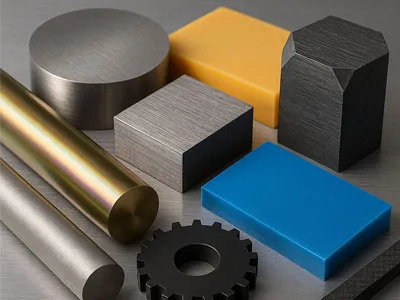
Both processes support a wide range of CNC materials:
However, 5 axis CNC machining is often preferred for hard-to-machine materials due to better tool access.
When Is 5 Axis CNC Machining Worth the Cost?
5 axis CNC machining is worth the higher CNC machining cost when:
Part complexity would require multiple 3 axis setups
Tolerance stacking is a concern
Reduced lead time is critical
Part quality impacts performance or safety
For simple parts, 3 axis CNC machining remains the most economical choice.
CNC Machining Cost Optimization Tips
Use 3 axis machining whenever geometry allows
Avoid unnecessary 5 axis machining
Optimize part design for fewer setups
Work with CNC machining manufacturers offering DFM support
These steps help reduce overall CNC machining price.
FAQ: 3 Axis vs 5 Axis CNC Machining
Is 5 axis CNC machining always more expensive?
Per hour, yes—but total cost may be lower for complex parts.
Can 3 axis CNC machining achieve high precision?
Yes, for simple geometries and standard tolerances.
Which is better for aluminum CNC machining?
Both work well, but 3 axis machining is usually more cost-effective.
Is 5 axis CNC machining common in China?
Yes. Many China CNC machining manufacturers offer advanced 5 axis CNC machining services.
Conclusion
The choice between 3 axis vs 5 axis CNC machining depends on part complexity, tolerance, and budget.
3 axis CNC machining offers low cost and simplicity, while 5 axis CNC machining delivers superior accuracy and efficiency for complex parts.
Choosing the right process helps control China CNC machining cost while ensuring part quality.