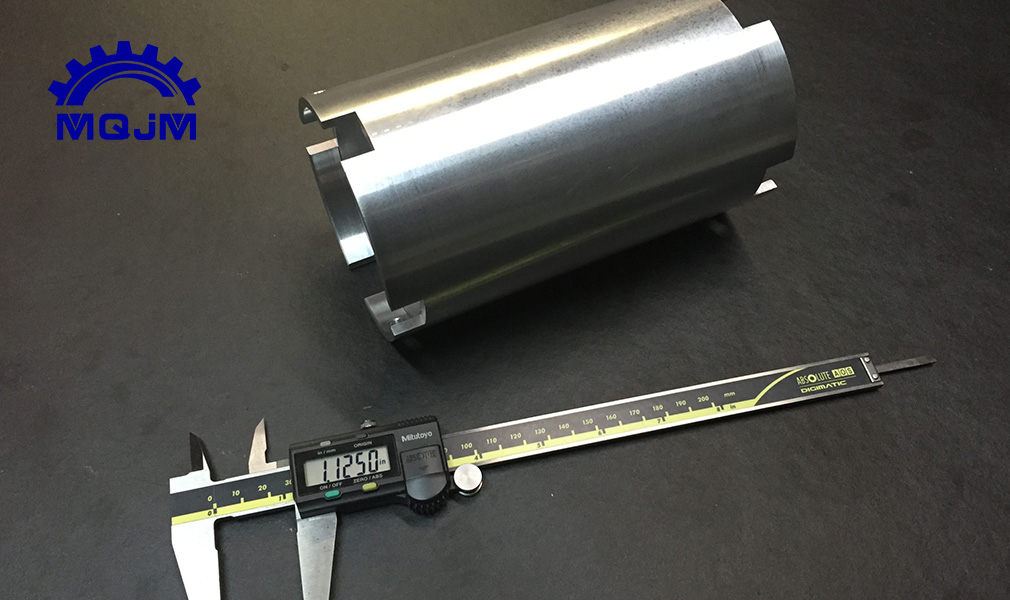
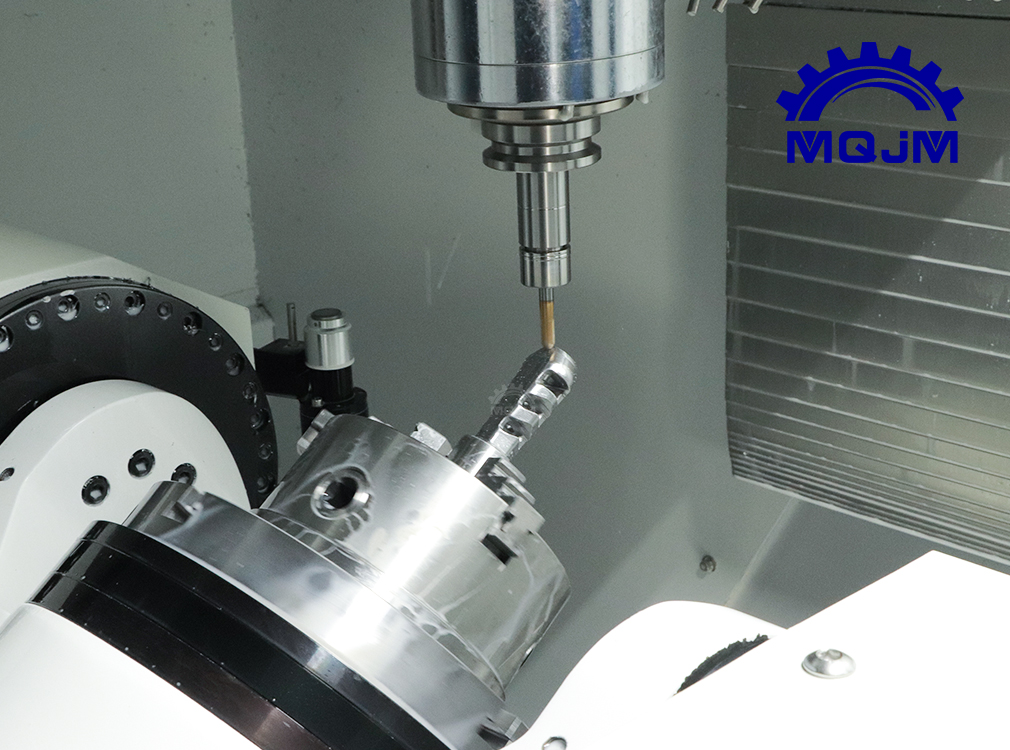
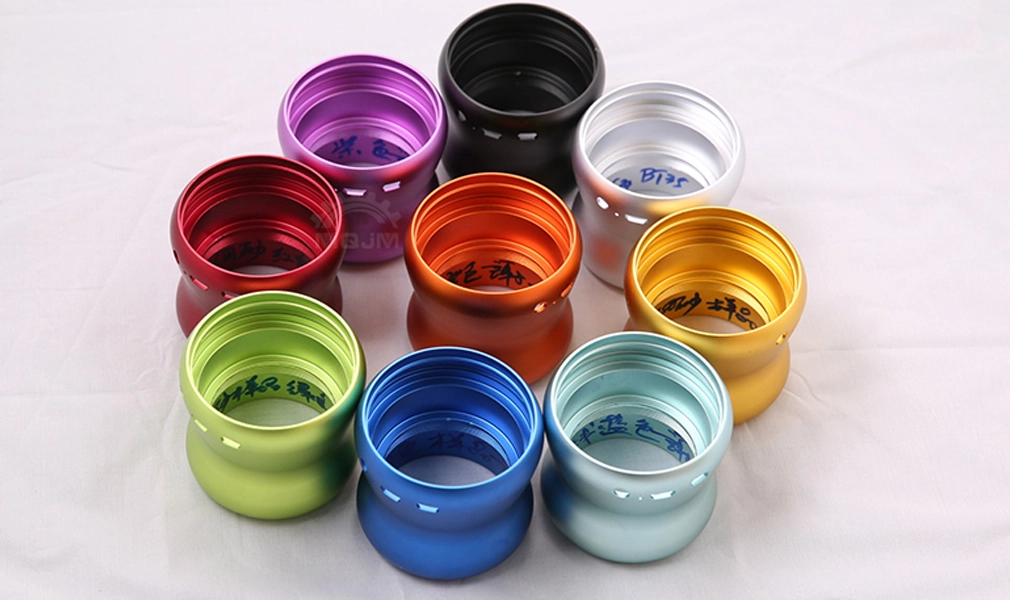
For procurement managers, mechanical engineers, and product development teams in aerospace, robotics, medical devices, automotive, electronics, and industrial automation, CNC machining is the most direct path from a CAD model to a functional precision part. But the supplier selection decision carries more risk than most buyers initially recognize. A weak CNC machining partner may deliver an acceptable prototype and then fail on batch consistency, tolerance control, material documentation, or surface finish quality—exactly when the project is most exposed. This guide is written for B2B buyers who need a structured framework for evaluating a reliable CNC machining company, with particular attention to CNC stainless steel machining, which demands special process control due to hardness, heat generation, tool wear, and surface finish challenges that softer metals do not present. MQJM provides custom CNC machining services in China with 3/4/5-axis machining, CMM and 3D projector inspection equipment, 50+ material options, and support for precision machined parts across aerospace, automotive, medical, robotics, and industrial automation applications.
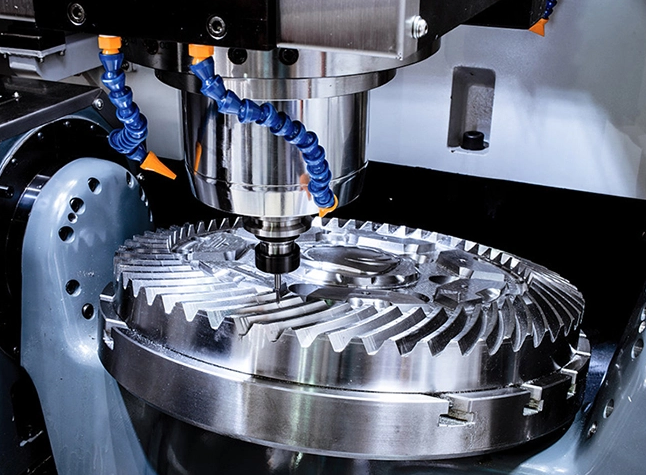
Why the Cheapest CNC Quotation Is Often the Most Expensive Decision
The pain point for B2B buyers is not that low-cost CNC suppliers are universally bad. It is that the cost of a supplier failure is almost always higher than the cost difference between a reliable partner and a cheap one—and the failure usually surfaces at the worst possible moment: during batch production, during a customer qualification audit, or during final assembly when a dimensional deviation is discovered.
The most common supplier selection failures follow a predictable pattern:
Prototype parts pass inspection, but batch parts fail because the supplier did not document the process or control fixturing consistently
Critical tolerances are not measured properly because the supplier lacks CMM capability and relies on manual tools for complex geometries
The supplier cannot explain the difference between 3-axis, 4-axis, and 5-axis machining, which means they cannot advise on the most efficient approach for a given part
No formal inspection plan exists, so dimensional deviations are discovered by the buyer rather than the supplier
Poor handling of difficult materials—stainless steel, titanium, high-temperature alloys, or engineering plastics—leads to surface defects, dimensional drift, or tool marks that require rework
Weak DFM feedback means the buyer's design goes into production with avoidable cost drivers that could have been identified in 24 hours
Packaging damage during international shipment destroys surface-treated parts that were otherwise acceptable
For procurement teams, these failures translate into assembly delays, scrap and rework cost, missed launch deadlines, higher quality control workload, supplier switching cost, and in regulated industries, failed qualification audits. The key message is this: choosing a CNC machining supplier is not only about price. It is about precision, process capability, material knowledge, communication, compliance, and long-term production reliability.
What a Reliable CNC Machining Partner Should Actually Provide
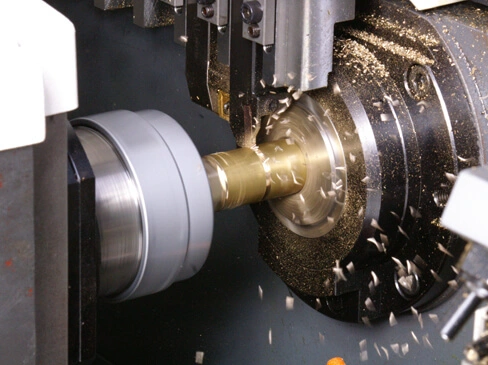
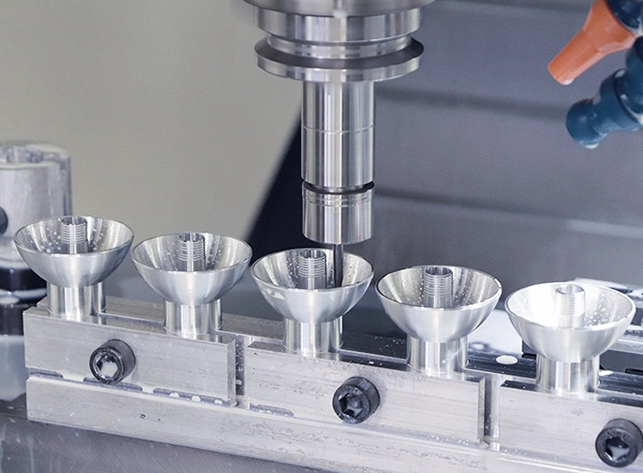
CNC machining is a computer-controlled manufacturing process that uses machine tools including mills, lathes, routers, and grinders to cut material into precise custom parts. The process starts with a 3D CAD model, which is converted into G-code to control tool speed, feed rate, position, coordination, and machining sequence. The output is a precision part that matches the drawing—but only if the supplier has the capability, process discipline, and inspection infrastructure to make that happen consistently.
Core CNC Machining Services Buyers Should Expect
| Service Area | What It Means | Buyer Value |
|---|
| CNC milling | Cutting flat, curved, pocketed, and complex surfaces | Housings, brackets, plates, fixtures |
| CNC turning | Producing round, threaded, shaft-like, or sleeve parts | Pins, bushings, fittings, connectors |
| 4-axis machining | Adds rotational access to the workpiece | Reduces setups, improves feature consistency |
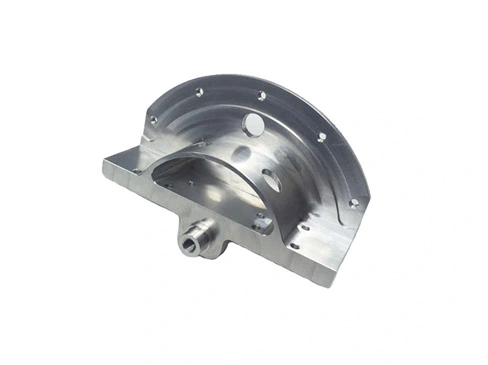
| 5-axis machining | Machines complex multi-surface parts in fewer setups | Aerospace, medical, impellers, complex housings |
| CNC curved surface machining | Handles complex contours and surface geometry | Advanced industrial design components |
| CNC multi-axis machining | Combines advanced axis movement for complex parts | Efficiency for geometrically demanding designs |
MQJM's CNC machining service portfolio includes CNC milling, 5-axis machining, 4-axis machining, CNC curved surface machining, and CNC multi-axis machining as part of its China custom CNC machining service offering.
A reliable CNC machining company should provide more than machine capacity. It should provide manufacturability feedback before production, inspection support with documented results, material expertise across metals and engineering plastics, surface treatment planning, compliance documentation, and repeatable production capability from prototype through batch orders.
The 5 Critical Factors: How to Evaluate a CNC Machining Supplier Before Committing
This section addresses the five evaluation factors that separate a reliable CNC machining partner from a supplier who looks acceptable at the RFQ stage and creates problems at every stage after.
Factor 1: Precision Inspection Capability — Why CMM Matters
Precision begins with process planning, but it is proven by inspection. A supplier must understand which dimensions are critical, which tolerances are functional, and which features can be relaxed to reduce cost—and then must be able to verify the results with appropriate measurement equipment.
CMM—Coordinate Measuring Machine—inspection is critical for high-precision CNC parts because it can verify complex geometries, hole positions, flatness, concentricity, perpendicularity, and tight dimensional relationships more reliably than manual tools alone. For parts with GD&T requirements, positional tolerances, or complex 3D features, CMM inspection is not optional—it is the only way to prove conformance.
Buyers should ask:
Does the supplier have CMM inspection capability, and what is the machine's measurement range?
Can they provide dimensional reports with actual versus nominal values?
Can they measure complex 3D features, internal geometries, and thread characteristics?
Are inspection points agreed before machining begins?
Is first article inspection available, and what does the report include?
Can the supplier measure surface roughness, and what Ra values can they achieve?
MQJM states that it follows international quality standards from material selection to production and is equipped with CMM, 3D projector, and other measuring equipment to support high-precision CNC machining services, with machining accuracy reaching ±0.005 mm.
Factor 2: Multi-Axis Machining Capability — Matching the Machine to the Part
Different parts require different machining strategies. A supplier with only basic 3-axis capability may struggle with undercuts, multi-face features, curved surfaces, and parts requiring tight positional accuracy across multiple setups.
| Machining Type | Best Application | Buyer Advantage |
|---|
| 3-axis CNC machining | Simple plates, pockets, housings, brackets | Cost-effective and fast for straightforward geometries |
| 4-axis CNC machining | Side features, curved parts, rotational components | Fewer setups, better dimensional consistency |
| 5-axis CNC machining | Complex surfaces, aerospace parts, medical parts, impellers | Higher geometric flexibility and precision in fewer setups |
| Multi-axis CNC machining | Complex designs requiring multiple angles | Better efficiency and fewer repositioning errors |
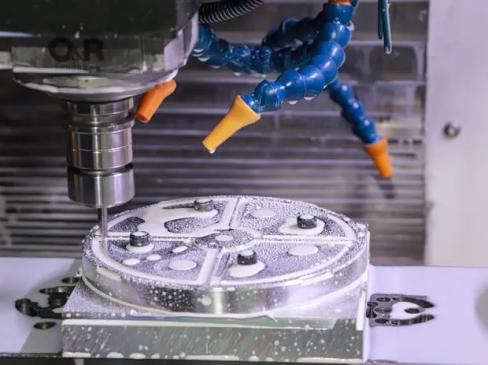
MQJM's in-house machining shop uses 3/4/5-axis CNC machining machines to handle complex geometries with precision and efficiency, with 5-axis CNC machining services positioned for complex, multi-faceted parts requiring high precision.
Factor 3: Material Expertise — Stainless Steel, Titanium, Alloys, and Engineering Plastics
Material knowledge directly affects cost, tolerance stability, surface quality, tool life, and delivery time. A supplier who understands only aluminum will create problems when the project requires stainless steel, titanium, or engineering plastics.
MQJM lists aluminum, stainless steel, steel, copper, brass, and plastics as high-performance material options, with stainless steel grades including SS303, 304/304L, 316/316L, 17-4, and 416, and plastics including POM, PMMA, PEEK, ABS, nylon, and PVC.
Why CNC Stainless Steel Machining Requires Special Process Control
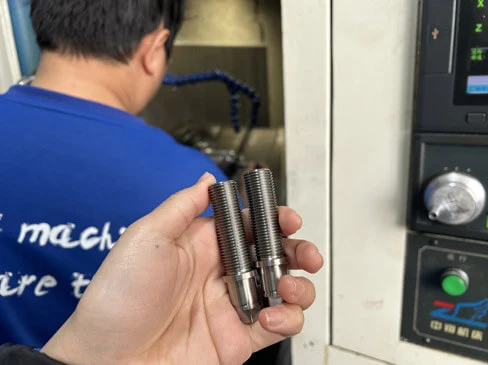
CNC stainless steel machining is one of the most demanding material challenges in precision manufacturing. Stainless steel is harder than aluminum, generates significantly more heat during cutting, accelerates tool wear, and requires careful control of cutting speed, feed rate, tool material, coolant application, and cutting depth. If any of these parameters are poorly managed, the result is surface defects, dimensional drift, work hardening, or tool failure that affects the entire batch.
Buyers sourcing stainless steel CNC parts should specifically ask:
What stainless steel grades does the supplier regularly machine?
What tooling strategy do they use for 304, 316, and 17-4 grades?
How do they control heat buildup in thin-wall stainless steel parts?
What surface finish can they achieve on stainless steel, and how is it verified?
Can they provide passivation or other corrosion protection treatments?
Factor 4: Early DFM Feedback — How Design Review Can Save 30% or More
DFM—Design for Manufacturability—feedback is the most undervalued service a CNC machining supplier can provide. When a supplier reviews a CAD file before production and identifies avoidable cost drivers, the buyer can make design changes that cost nothing at the drawing stage but would have cost significantly in machining time, tooling, setups, and rework.
Early DFM intervention can reduce avoidable machining cost by:
Removing unnecessary tight tolerances that require slower machining and more inspection
Simplifying geometry to reduce setup count and machining time
Improving tool access to eliminate special tooling requirements
Reducing deep cavity depth to standard tool length ratios
Preventing thin-wall deformation by recommending minimum wall thickness
Selecting more efficient materials or surface finishes for the application
Identifying sharp internal corners that require radius relief
In some projects, these design corrections can reduce total machining cost by 30% or more, especially when the original design was created by engineers focused on function rather than manufacturability. MQJM states that its engineering team provides professional advice covering material selection, part design suggestions, cost savings, and technical reminders before CNC machining production.
Factor 5: Compliance, Documentation, and Long-Term Supplier Reliability
For aerospace, medical, automotive, electronics, and industrial automation buyers, supplier documentation is often as important as the part itself. A supplier who cannot provide material certificates, inspection reports, surface treatment certificates, or traceability records may be acceptable for low-stakes prototype work but is not suitable for regulated or high-reliability production programs.
Buyers should verify:
ISO 9001 or equivalent quality management certification
Material certificates for each batch
First article and batch inspection reports
Surface treatment certificates where applicable
RoHS or REACH documentation if required by the application
Export packaging standards that protect cosmetic surfaces during international shipment
Drawing revision control and engineering change management process
NDA support for confidential product development
Component Breakdown, Industry Coverage, and Procurement Checklist
Industry Application Coverage
A reliable CNC machining supplier can support a wide range of B2B industries:
Aerospace structural and precision components
Automotive and racing performance parts
Motorcycle and mountain bike accessories
Medical device housings, fixtures, and precision instruments
Electronics enclosures and precision hardware
Robotics structural components and end-effectors
Industrial automation fixtures, brackets, and mechanical assemblies
Ships, yachts, and marine hardware
Energy equipment and precision instruments
Custom hardware for product development programs
MQJM states that it makes samples and mass-produces customized parts for industries including aerospace, racing cars, motorcycles, mountain bikes, medical equipment, automobiles, electronics, robots, machinery, ships, yachts, and industrial automation.
Key Benefits of Choosing a Reliable CNC Machining Company
Lower rework risk through better tolerance control and inspection
Faster prototype-to-production transition with a supplier who covers both stages
Better material selection through supplier expertise and DFM feedback
More stable batch repeatability through controlled fixturing and process documentation
Improved surface finish consistency across prototype and production quantities
Stronger inspection documentation for regulated and high-reliability applications
Lower total project cost through early DFM intervention
Better communication between engineering and procurement throughout the project
Higher confidence for long-term supply chain planning and repeat orders
Challenges to Address Before Choosing a Supplier
Before committing to a CNC machining supplier, buyers should ask:
Can this supplier prove dimensional accuracy with CMM inspection and documented reports?
Does the supplier understand the specific material requirements of the project?
Can they machine stainless steel, titanium, high-temperature alloys, or engineering plastics?
Does this part require 3-axis, 4-axis, or 5-axis machining, and does the supplier have the right capability?
Can the supplier provide DFM feedback before production begins?
Are the tolerances on the drawing realistic, necessary, and achievable at the quoted cost?
Can they support both prototypes and production batches without re-qualifying the process?
What quality documents are available, and do they meet the project's compliance requirements?
B2B Procurement Checklist
Before contacting MQJM or any CNC machining supplier, prepare the following:
3D CAD files in STEP or IGES format
2D drawings with tolerances and GD&T if applicable
Material grade and any material certificate requirements
Surface finish requirements and functional or cosmetic priority
Quantity for prototype and anticipated batch production
Critical dimensions and assembly requirements
Thread specifications: metric or UN, tolerance class
Heat treatment requirements if applicable
Inspection report and CMM report requirements
Certification requirements: ISO 9001, RoHS, REACH, or other
Packaging requirements for surface-treated or cosmetic parts
Delivery destination and target lead time
Target cost range for production batches
Repeat order forecast and NDA requirement
Quality Continuity Guide for Long-Term CNC Machining Programs
For repeat procurement programs, maintaining part data quality is as important as maintaining part dimensional quality. Buyers should keep:
Controlled drawing revisions with clear change history
Approved sample records and first article inspection reports on file
Batch inspection reports for every production order
Material certificates and surface treatment specifications
Critical-to-quality dimension list with the inspection method for each dimension
Supplier communication logs for engineering changes
Corrective action records for any non-conformance events
Reorder history and approved supplier list status
Conclusion: Make Supplier Selection a Strategic Decision, Not a Price Decision
The five critical factors—precision inspection, multi-axis capability, material expertise, DFM feedback, and compliance readiness—are not a wish list. They are the minimum requirements for a CNC machining supplier who can support a serious B2B production program from prototype through repeat batch orders. For buyers sourcing precision parts in aerospace, medical, automotive, robotics, or industrial automation, the cost of a supplier failure is always higher than the cost of choosing a reliable partner from the start.
Contact MQJM to discuss your CAD files, tolerance requirements, material grade, stainless steel machining challenges, CMM inspection needs, surface treatment requirements, prototype schedule, and production plan. MQJM provides custom CNC machining services with 3/4/5-axis machining capability, multi-material options, CMM and 3D projector inspection equipment, engineering advice before production, and support for samples and mass production across aerospace, automotive, medical, electronics, robotics, and industrial automation applications.
Frequently Asked Questions
Q1: What is the most important factor when choosing a CNC machining supplier?
Consistent quality delivery. Buyers should verify inspection capability, tolerance control, material expertise, DFM feedback process, and batch repeatability before committing to a supplier—not just compare quotation prices.
Q2: Why is CMM inspection important in CNC machining?
CMM inspection verifies complex dimensions, hole positions, geometric tolerances, and critical features that manual tools cannot measure reliably. It is essential for precision parts in aerospace, medical devices, robotics, and automotive applications where dimensional conformance must be documented.
Q3: What is the difference between 3-axis, 4-axis, and 5-axis CNC machining?
3-axis is suitable for simpler geometries with features on one or two faces. 4-axis adds rotation, reducing setups for side features and cylindrical parts. 5-axis handles complex multi-surface components in fewer setups with higher precision and fewer repositioning errors.
Q4: Why is CNC stainless steel machining more difficult than aluminum machining?
Stainless steel is harder, generates more heat during cutting, accelerates tool wear, and is prone to work hardening. Successful CNC stainless steel machining requires careful control of cutting speed, feed rate, tool material, coolant application, and cutting depth—process knowledge that not all suppliers possess.
Q5: How does early DFM feedback reduce CNC machining cost?
DFM feedback identifies unnecessary tight tolerances, deep cavities, thin walls, hard-to-machine corners, excessive setups, and unsuitable materials before production begins. Correcting these issues at the design stage can reduce total machining cost by 30% or more compared with machining a design that was not optimized for manufacturability.