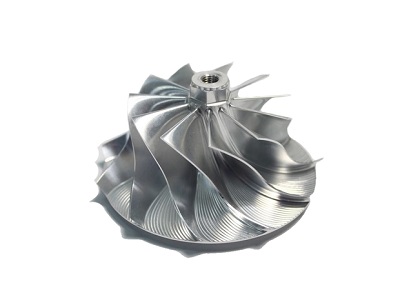
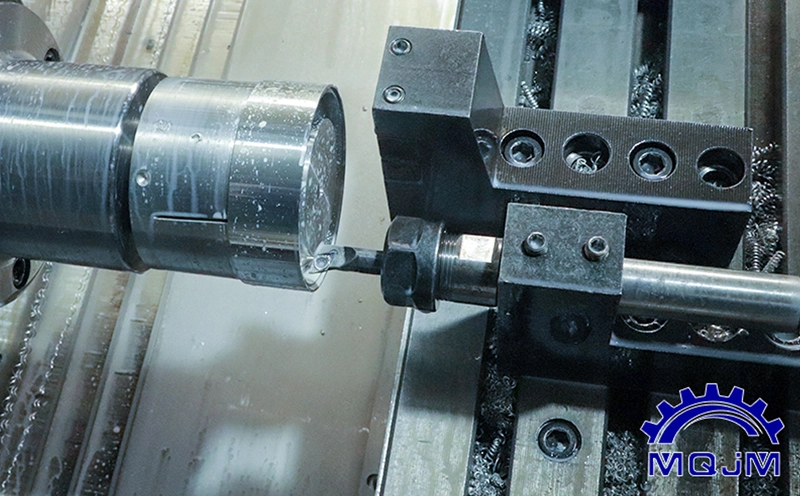
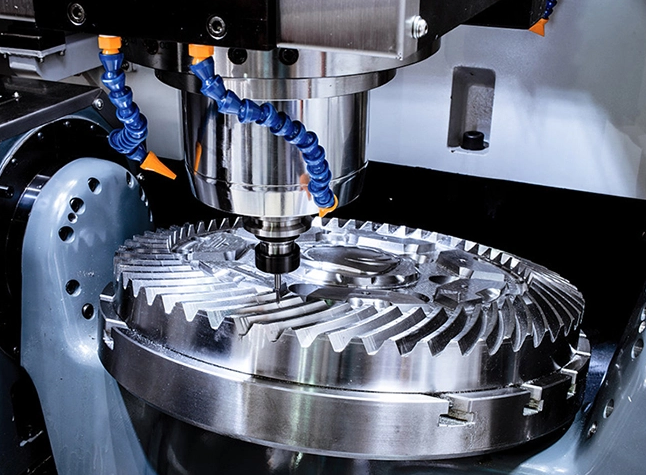
In modern high-performance automotive engineering, the intake manifold is one of the most critical components affecting engine performance. It is responsible for distributing air evenly to each cylinder, and its design and manufacturing quality directly determine airflow efficiency, combustion stability, and overall horsepower output.
As the demand for performance vehicles and modified engines continues to increase, traditional casting and manual machining methods can no longer meet the requirements for complex structures and high precision.
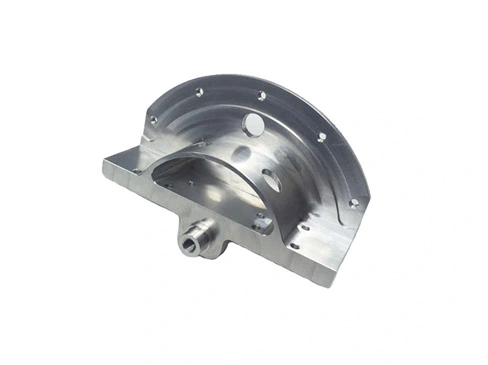
Today, CNC intake manifold machining has become a core process in high-performance engine manufacturing.
1. What Is an Intake Manifold
An intake manifold is a key structure in the engine intake system, responsible for distributing air (or air-fuel mixture) evenly into each cylinder.
During engine operation, air flows through the throttle body into the intake manifold and then through internal runners into each cylinder. Any imbalance or restriction in airflow will directly affect engine performance.
Industry research shows that internal runner design plays a critical role in airflow distribution and volumetric efficiency. Poor machining accuracy can lead to turbulence, uneven air distribution, and power loss.
2. Why Intake Manifolds Require CNC Machining
Traditional cast intake manifolds have clear limitations, such as rough internal surfaces, structural inaccuracies, and poor consistency. These issues directly reduce airflow efficiency.
In contrast, CNC-machined intake manifolds offer significant advantages:
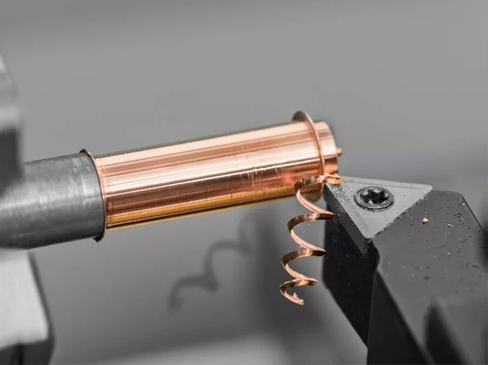
CNC machining enables micron-level precision, ensuring accurate internal geometry
Smooth internal surfaces reduce airflow resistance and turbulence
Complex 3D geometries can be achieved, which are impossible with traditional casting
Studies show that CNC machining significantly improves airflow efficiency and combustion stability in high-performance engines, resulting in better power output.
3. The Critical Role of 5-Axis CNC Machining in Intake Manifolds
High-performance intake manifolds feature highly complex structures, including:
Curved internal airflow channels
Deep cavity machining
Multi-directional airflow paths
Asymmetrical optimized designs
These features require 5-axis CNC machining to be manufactured accurately.
The advantage of 5-axis machining lies in its ability to process multiple angles in a single setup. By rotating along additional axes, complex spatial geometries can be machined without repositioning, significantly reducing error and improving overall accuracy.
Industry data shows that 5-axis CNC machining greatly enhances dimensional accuracy and surface quality for complex automotive components, making it a key technology in performance manufacturing.
4. MQJM Capability in CNC Intake Manifold Machining
As the automotive tuning and performance industry continues to evolve, demand for complex components such as intake manifolds has increased significantly, with a growing reliance on 5-axis CNC machining capabilities.
Under this trend, MQJM's customer demand has also shifted. More and more projects are focused on high-complexity performance components, with intake manifolds being one of the most representative products.
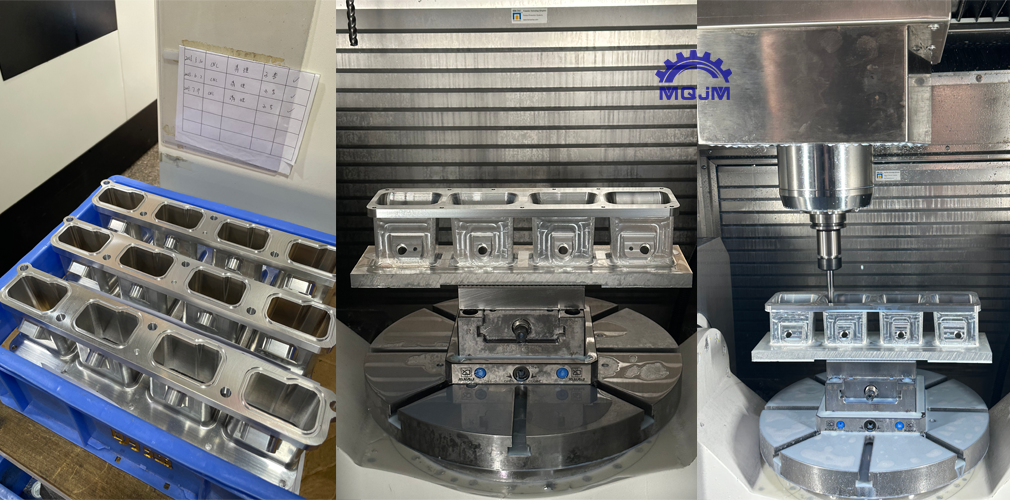
Due to their complex internal structures and strict airflow requirements, intake manifolds require precise multi-axis machining to ensure stable and optimized engine performance.
MQJM has built strong expertise in this field through years of engineering experience. Our engineers have been involved in numerous similar projects from early stages, including CAM programming and machining strategy development. This allows us to fully understand complex surface geometries, deep cavity machining, and multi-axis toolpath optimization.
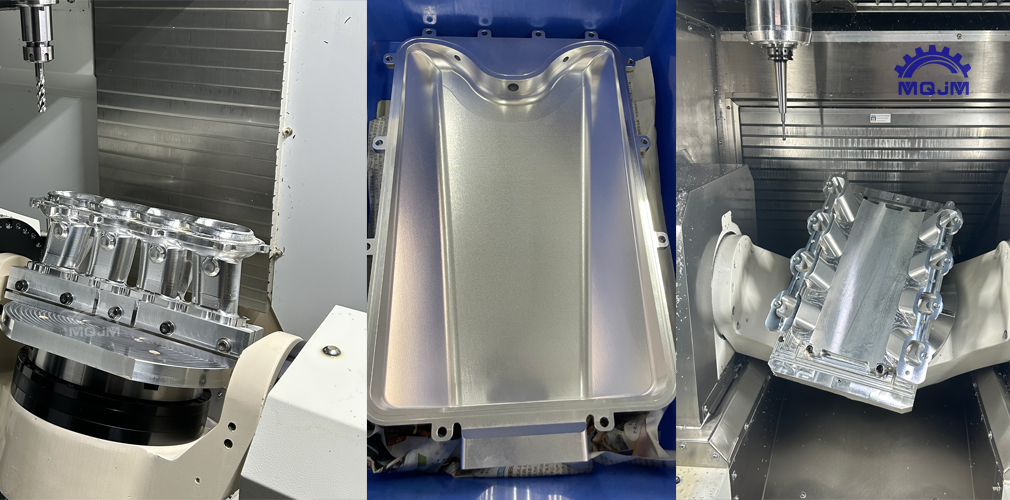
Based on this experience, MQJM is able not only to machine complex parts reliably, but also to provide manufacturability optimization at the design stage, helping customers reduce production risks and improve final product performance.
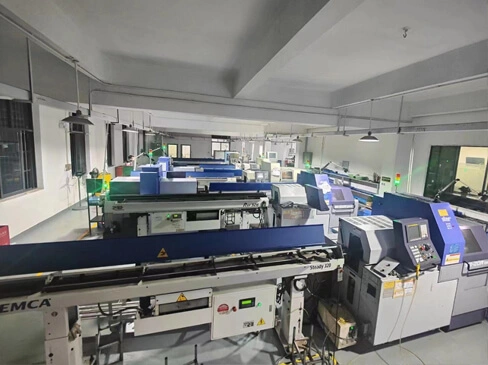
At the same time, MQJM continues to upgrade its 5-axis machining equipment and process capabilities. By adopting advanced CNC systems and optimized toolpath strategies, we achieve higher precision, better surface finish, and more stable production consistency.
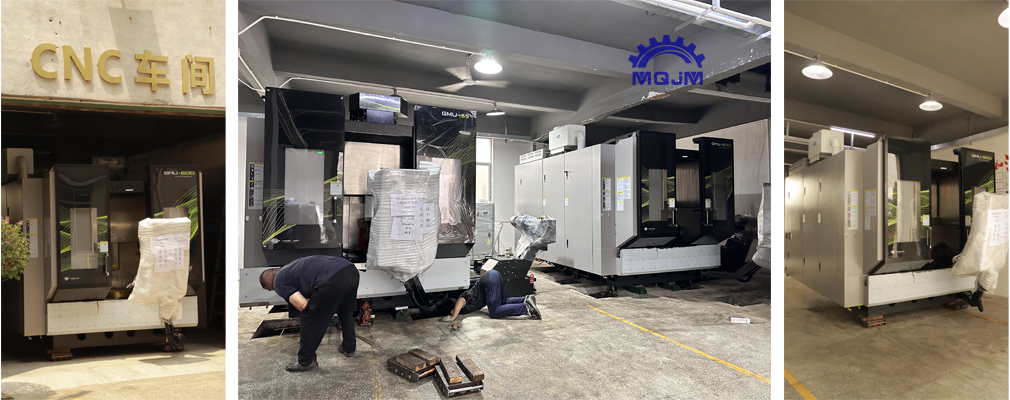
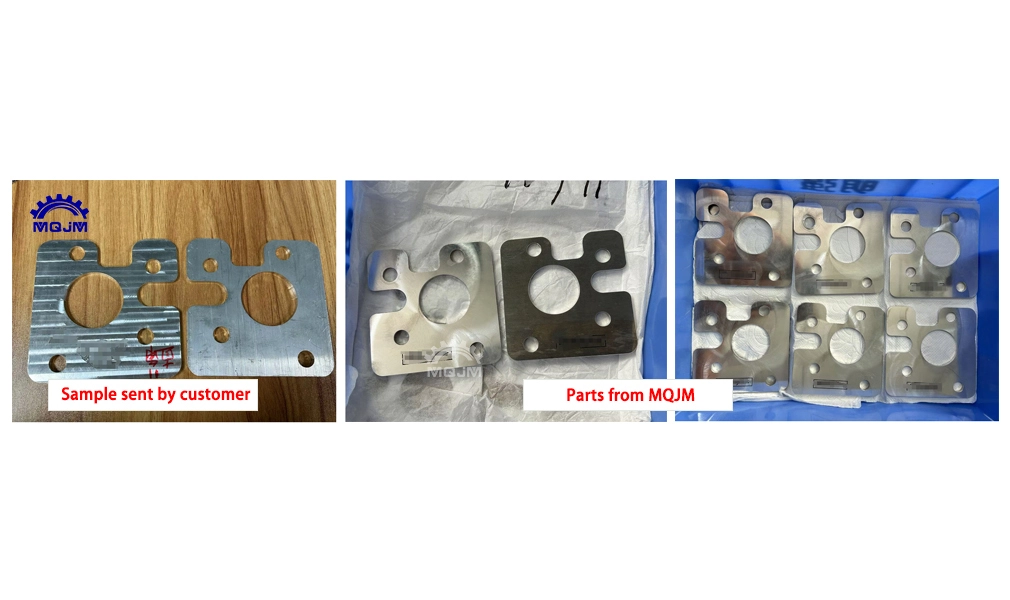
In real-world applications, this enables MQJM to reliably manufacture complex performance components such as intake manifolds, supporting both prototype development and small-to-medium batch production.
5. How CNC Intake Manifolds Improve Engine Performance
High-precision CNC intake manifolds significantly enhance engine performance through:
Improved airflow efficiency
Balanced air distribution across cylinders
Enhanced combustion efficiency
Increased horsepower and throttle response
Research shows that optimized airflow channel design reduces pressure loss and improves engine output, making it a key factor in high-performance engine design.
6. Industry Shift: From Design-Driven to Manufacturing-Driven
The automotive tuning industry is undergoing a fundamental transformation.
In the past, success depended largely on design creativity and visual modifications. Today, real performance is defined by manufacturing capability, especially precision CNC machining.
Designs can be copied, but precision manufacturing cannot.
The industry has entered a new phase:
Performance is defined by manufacturing capability
7. Conclusion: Performance Ultimately Comes Down to Manufacturing Capability
From early handcrafted modifications, to engineering-driven optimization, and now to today's 5-axis CNC precision manufacturing, the evolution of the tuning industry is fundamentally a continuous upgrade of industrial capability.
Within this system, MQJM's 5-axis machining expertise sits at a critical position in the high-performance manufacturing chain—serving as the essential bridge between design intent and real-world performance.
By continuously improving its 5-axis machining capability and accumulating engineering experience, MQJM is able to provide global customers with high-precision, high-consistency, and high-performance manufacturing solutions for intake manifolds and other complex automotive components.